Bush Hammered Granite Pavers: Finish, Sizes, Cost & Uses
Eric Easterday • November 11, 2026
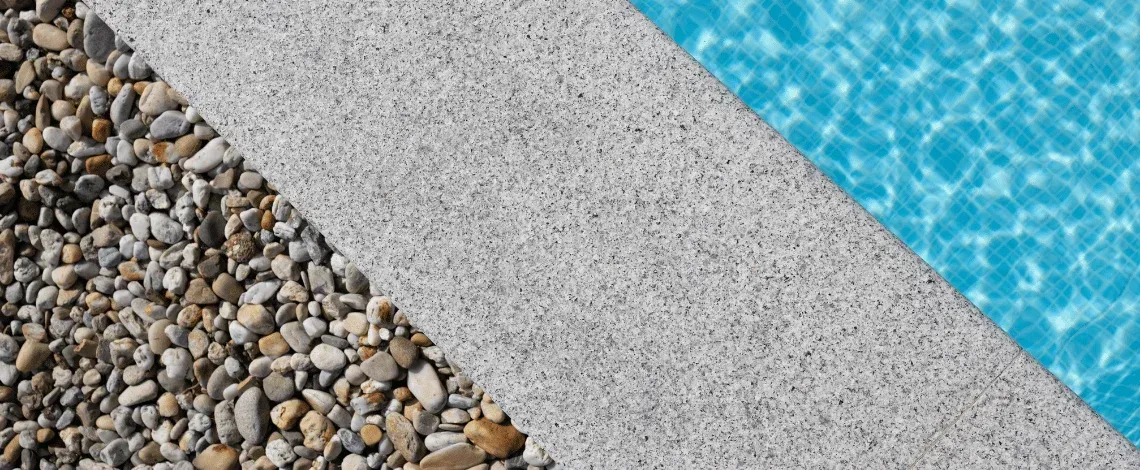
Bush hammered granite pavers are natural stone pavers with a rough, evenly pitted surface created through mechanical hammering. The texture improves traction, hides minor wear, and gives patios, walkways, driveways, and steps a natural appearance. Sizes, thickness, color, site preparation, and installation complexity all affect where the stone can be used and how much the project may cost.
What Is Bush Hammered Granite?
Bush hammered granite is made by repeatedly striking the surface of cut stone with a specialized pointed tool. The process removes the smooth sawn face and creates thousands of small, evenly distributed pits.
This finish is also sometimes called lychee finish granite because the surface resembles the textured skin of a lychee fruit. The depth and roughness can vary depending on the tool used and how heavily the stone is treated.
A bush hammered finish provides:
- More traction than polished or honed granite
- A consistent natural texture
- Less visible dirt and minor surface wear
- A durable surface for high-traffic areas
- A finish that works with traditional and modern properties
Common Bush Hammered Granite Paver Sizes
Bush hammered granite is available in several dimensions, although exact stock varies by supplier, stone color, and project location. Smaller pavers work well for borders and detailed patterns, while larger formats create a cleaner and more contemporary layout. Common bush hammered granite paver sizes include:
- 6 × 12 inches: Driveway aprons, borders, walkways, and repeating patterns
- 12 × 12 inches: Patios, paths, entrances, and smaller gathering areas
- 12 × 24 inches: Modern patios, walkways, and linear layouts
- 24 × 24 inches: Large patios, courtyards, and wide pedestrian areas
Granite intended for driveways or other heavy-use applications may be approximately 2.5 to 3 inches thick. The required thickness will depend on the installation method, expected weight, base construction, and intended use.
What Colors Are Available?
Gray is one of the most common choices because it pairs easily with concrete, brick, wood, and other natural stone. It also works well with both traditional New England homes and more modern outdoor spaces.
Available colors may include:
- Light gray
- Medium gray
- Charcoal
- Salt and pepper
- White and gray blends
- Beige or gold tones
- Muted brown tones
Bush hammering can make the granite appear lighter when dry because the process exposes tiny points across the surface. When the stone becomes wet, its color often looks darker and richer, making it important to review samples in both conditions.
Where Are Bush Hammered Granite Pavers Used?
Bush hammered granite is well suited to areas that need strength, traction, and a natural stone appearance. Its pitted finish provides a more secure surface than polished granite, especially in locations exposed to rain or regular foot traffic.
Patios
Large granite pavers can create a strong, refined patio surface without looking overly polished. The texture also adds grip when the area becomes wet. Larger formats can also make the finished space feel more open and visually consistent.
Walkways
Bush hammered granite works well for front paths, side-yard connections, and walkways leading to outdoor living areas. Rectangular pavers can also be arranged in running bond or custom patterns. Their durable surface makes them suitable for routes that receive regular foot traffic.
Driveways and Aprons
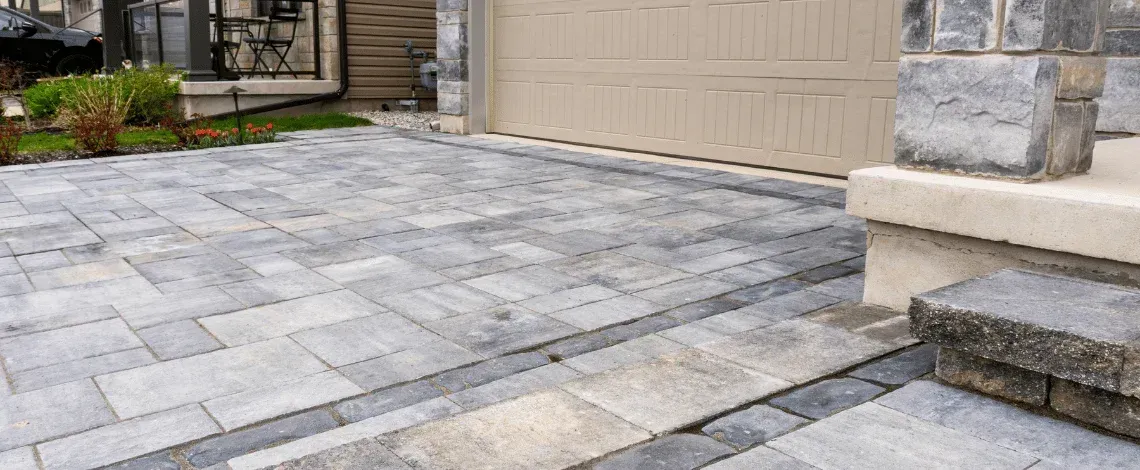
Thicker granite pavers may be used in driveway areas when installed over the correct base. Smaller 6 × 12 pavers are commonly selected for aprons, borders, and transitions. They can also add a defined edge between the driveway and surrounding hardscape features.
Steps and Landings
The textured surface makes bush hammered granite a practical option for steps, entrance landings, and elevation changes. Proper sizing, edge detailing, and even placement remain essential. The finish can also help create a more secure surface in wet or icy conditions.
Commercial Properties
Granite can support regular pedestrian traffic while maintaining a professional appearance. It may be used for entrances, courtyards, pathways, and shared outdoor areas. Its durability also makes it a practical choice for spaces that need to maintain their appearance under frequent use.
Bush Hammered Granite vs. Other Finishes
Granite can be treated in several ways, and each finish changes the appearance, texture, and appropriate use of the stone. Bush hammered granite is generally chosen when visible texture and outdoor traction are priorities.
| Finish | Appearance | Texture | Common Uses |
|---|---|---|---|
| Bush hammered | Pitted and natural | Rough with strong grip | Patios, walkways, steps, driveways |
| Flamed | Slightly faded | Rough and irregular | Pool areas, patios, paths |
| Thermal | Natural and lightly uneven | Textured | Outdoor paving and steps |
| Honed | Smooth and matte | Low texture | Covered areas and accents |
| Polished | Glossy and reflective | Very smooth | Interior surfaces and decorative details |
Honed and polished granite may provide a more formal appearance, but they are generally less practical for exposed outdoor walking areas. Bush hammered and thermal finishes usually offer better traction.
What Affects the Cost of Bush Hammered Granite?
Bush hammered granite usually costs more than standard concrete pavers because it must be quarried, cut, textured, transported, and carefully installed. Its weight can also increase material handling and labor requirements.
Final project costs may depend on:
- Paver size and thickness
- Granite color and source
- Total installation area
- Pattern and layout complexity
- Excavation requirements
- Base preparation and compaction
- Access for equipment and deliveries
- Grading and water management needs
- Borders, steps, walls, or custom cuts
Large slabs may require special lifting equipment and more careful placement. Smaller pavers require more individual pieces and joints, so material price alone does not determine the total installation cost.
What Makes a Granite Paver Installation Last?
Granite is highly durable, but long-term performance depends heavily on the preparation beneath it. An inadequate base, poor grading, or uneven support can cause movement even when premium stone is used. A proper installation should include:
- Correct excavation depth: Enough space is needed for the pavers, setting material, and compacted base.
- Strong base preparation: Aggregate should be installed and compacted in controlled layers.
- Effective grading: The surface must direct water away from structures and prevent pooling.
- Even stone support: Each paver should be fully supported to reduce rocking and movement.
- Stable edges: Borders or restraints help keep the completed layout in place.
- Appropriate joint treatment: Joint width and material should match the pavers and installation method.
These details are especially important in Massachusetts, where outdoor surfaces experience rain, snow, freezing temperatures, and repeated freeze-thaw cycles.
Hardscaping Built Around the Right Stone
At ET Landscaping Construction, we design and install hardscaping based on the property, intended use, and overall outdoor plan. Our services include patios, walkways, driveways, retaining walls, boulder walls, block walls, flagstone features, bluestone walkways, and custom stone installations.
We help clients compare stone finishes, paver sizes, colors, and layout options before construction begins. We also handle the preparation, grading, base installation, stone placement, and finishing details needed to build a stable and attractive outdoor surface.
Choose Bush Hammered Granite for Your Next Hardscape
Bush hammered granite can bring durable performance, dependable traction, and natural character to patios, walkways, steps, driveways, and other outdoor surfaces. Our team can help you select the right size, finish, thickness, and layout for your property.
Contact us today to plan a professionally installed granite hardscape in Rehoboth, Dighton, or the surrounding area.
Recent Posts